

Ciao, ciao
My Italian Summers

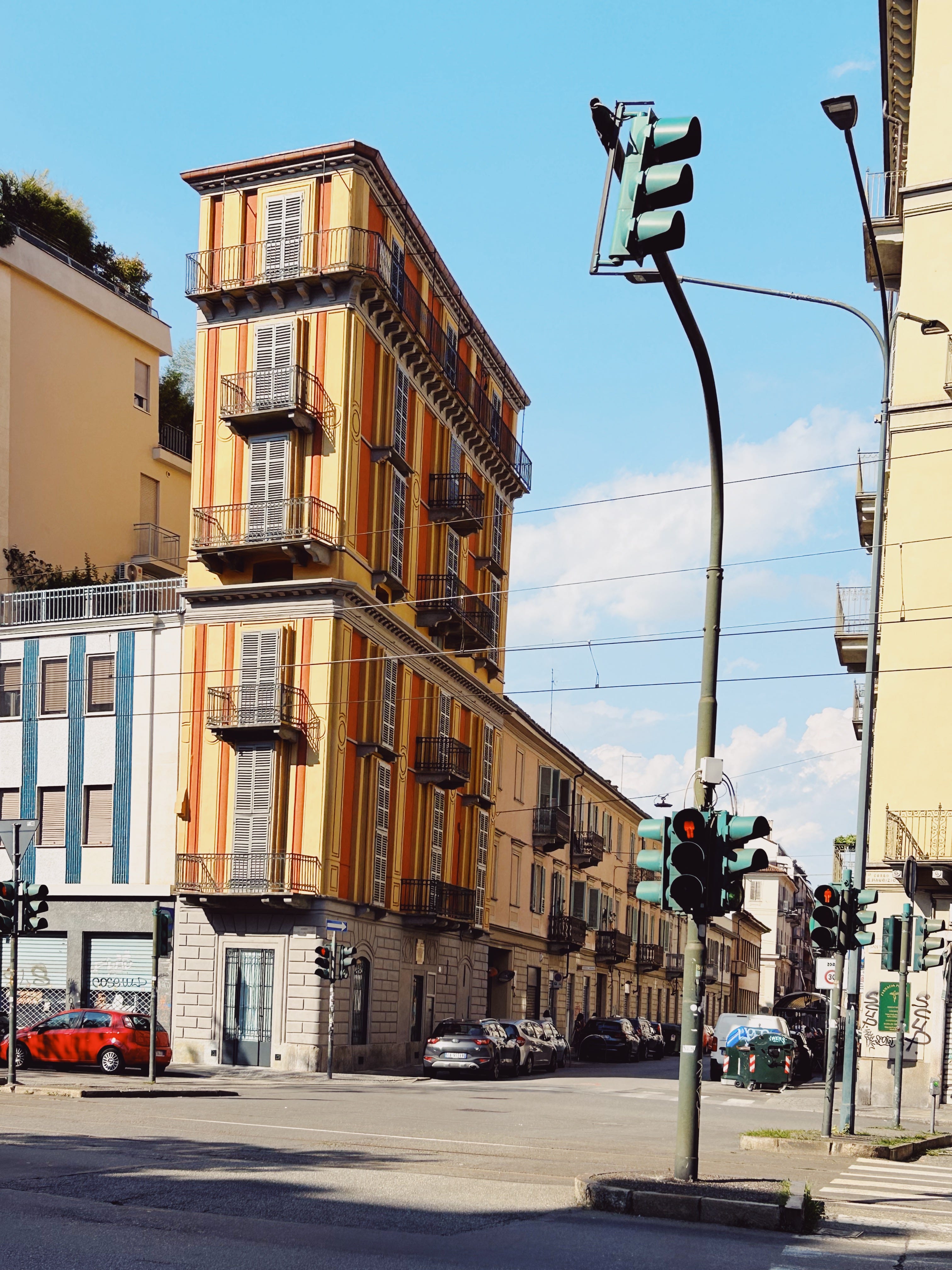
I flew back to Europe from Beijing straight into the heat wave that was sweeping the continent; even Denmark was not spared. The day I landed, Copenhagen hit thirty-three degrees, likely one of the hottest days of the Danish summer. Danish apartments are built to hold warmth through the winter, and in summer they hold it just as faithfully. There is no air conditioning — in ordinary times a virtue, at thirty-three degrees a test of character. At ten in the evening the sun was still hanging outside the curtain, declining to leave. Too hot to sleep, I lasted one day and then flew to Italy.
On the plane I reasoned that Italy could only be hotter. It was, and I found I didn’t mind. Danish heat feels like an accident; Italian heat is in the contract — you agreed to it when you bought the ticket. Same temperature: one leaves you feeling wronged, the other merely sweating.
Italy is probably my favorite country in Europe. Set aside Germany and Belgium, where work kept sending me back, and it is the country I have visited most: six times in the eight years since 2018, four of them in summer.
What is it about Italian summers?
Since moving to Europe I like to tell people that in summer I go nowhere: the North has the most comfortable temperatures in the world, and this is true. But a comfortable summer always feels short of something. It took me years to work out what. The summer in my memory is a checklist — cicadas; hard sun; drowsy afternoons with no air conditioning, only an oscillating fan turning its head and humming; the cool sweet mist that rises off a watermelon at the moment of cutting — and a summer only counts when every item is ticked. The watermelon must come cold from the refrigerator, and the cold watermelon must be eaten when you are about to melt; that is the whole pleasure of it. At twenty-five degrees, nothing needs rescuing. Danish supermarkets do sell melons, but not the kind sweetened by Mediterranean sun; for a respectable one you try your luck at the Middle Eastern grocer’s.
The summer I first met Italy, it happened to tick every box — and then some. The season in which you first meet a place decides much of what you will always think of it; it is almost as if my childhood summers had emigrated there, and so the place felt familiar to me before I could say why.
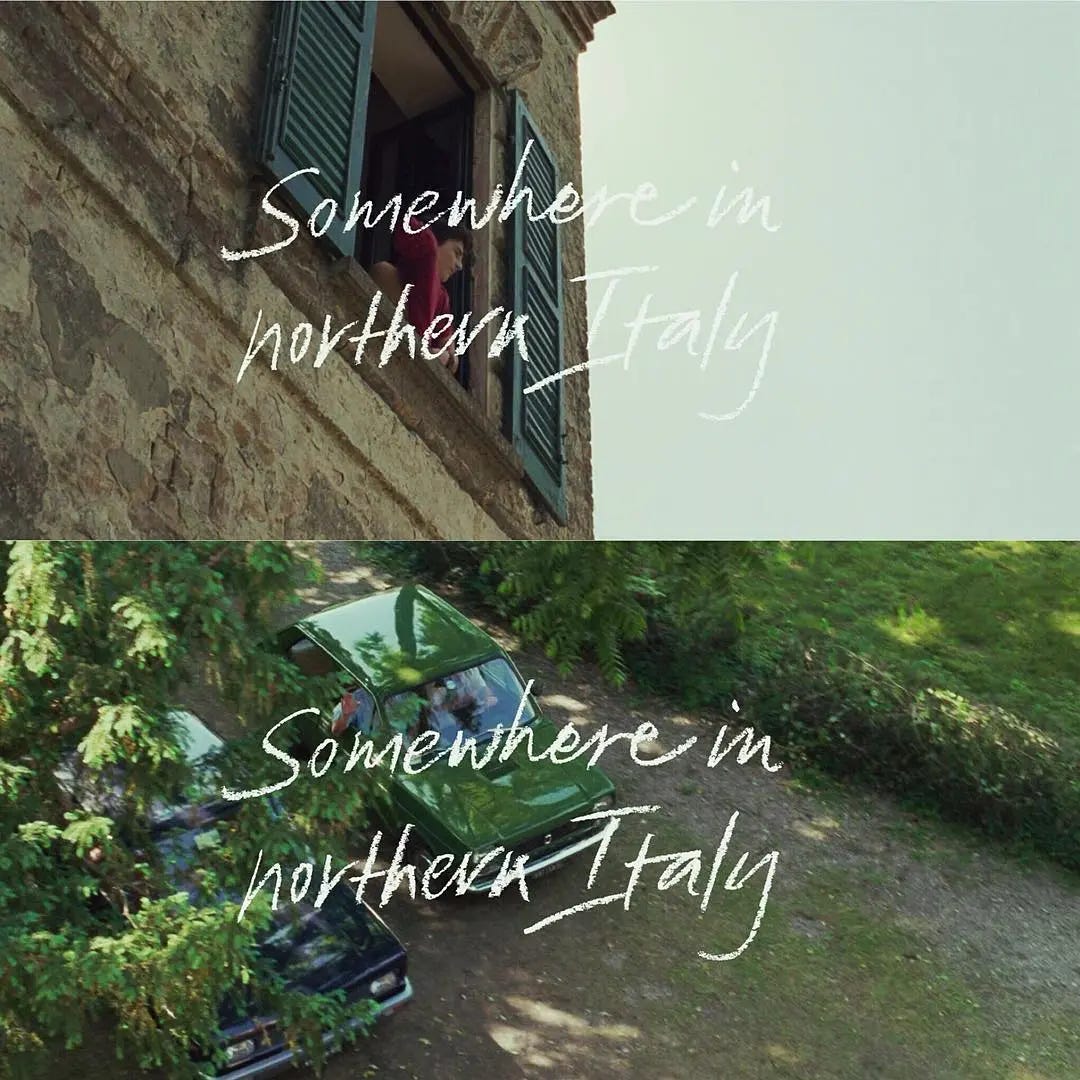
The wish itself I caught from a movie. Call Me by Your Name: peaches, more sunlight than anyone could reasonably need, and sweat that never quite dries. For a long time that was my entire imagination of a northern Italian summer. The film took a climate and made it romantic, ambiguous — as if heat were not a condition but the opening of a plot.
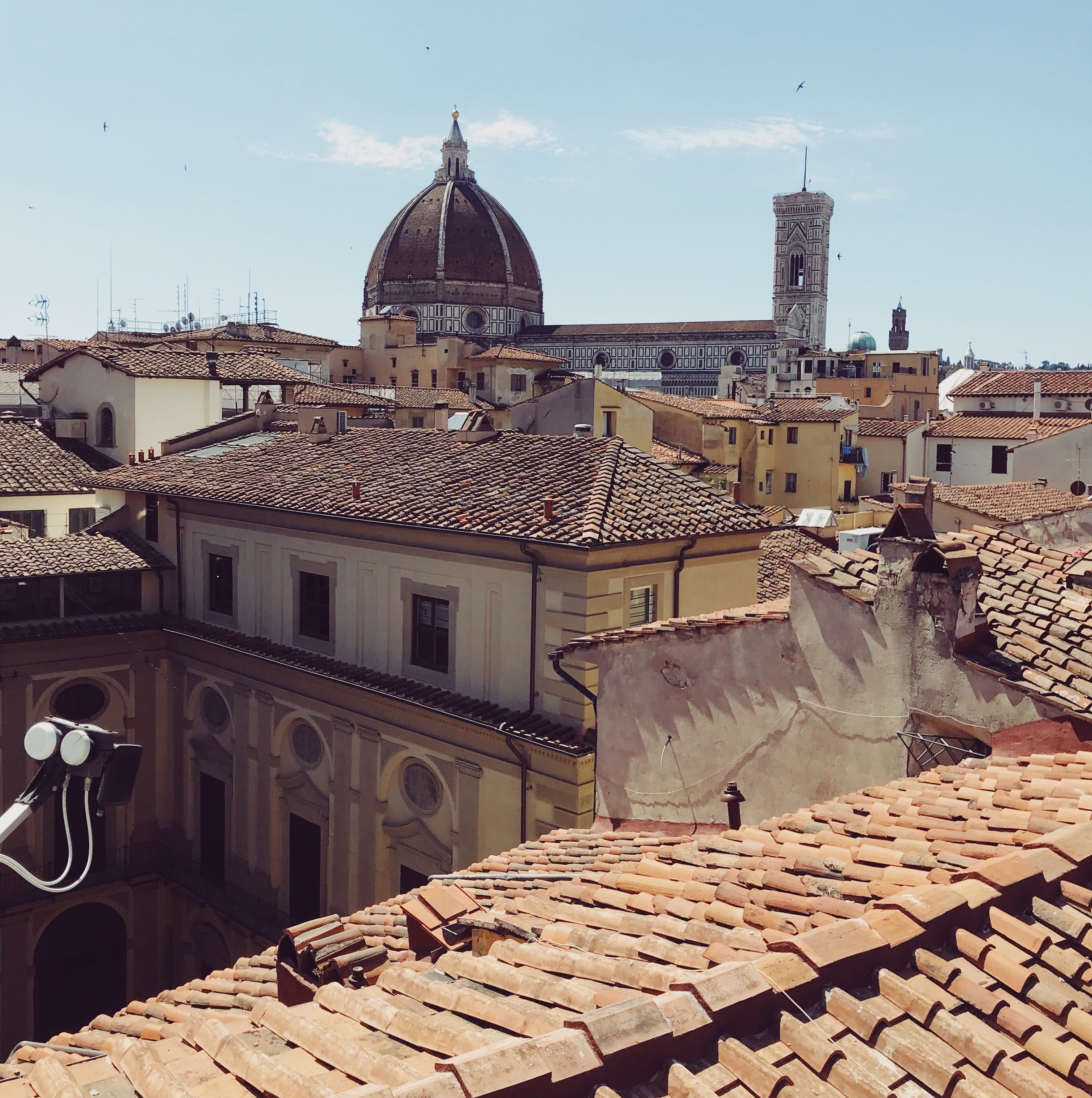
My first destination in Italy was Florence, 2018, a summer school on migration run by the European University Institute. I arrived two days early and stayed in an Airbnb not far from the Duomo. In the mornings I carried my coffee up to the roof. Florence lay spread below, and the dome stood there, unreasonably large. Every angle was a painting — not figuratively; whatever rectangle you cut out, someone had painted it already, and had been painting it for five hundred years. I remember thinking that Europeans come by their taste honestly: look at this daily and it would be hard to turn out otherwise. I also remember something close to despair. Beauty like that runs on a time lag of centuries, and I was clearly not going to catch up.
There is a phrase going around the Chinese internet lately: boom-era beauty (经济上行时期的美). It names a nostalgia — for the vitality of the years when everything was rising. Standing before what the Medici left behind, it occurred to me that the paintings and the sculpture are the same thing at humanity’s scale: an age at its richest and boldest, spending the whole surplus on beauty. To look at it across five hundred years, from inside our own garbage time, is a little like watching an afterglow. The light is not of this moment, and it is warm on the skin anyway.
Two days later I moved up to Fiesole, on the hill above Florence, into the accommodation the school had arranged. By the door was a little shop where the fruit was fresh, sweet, and cheap enough to be unsettling: grapes, peaches, apricots, figs. The owner wished me good morning in Italian every day and taught me to say “Buona giornata”, explaining that the whole trick is in the ending, which has to spiral upward.
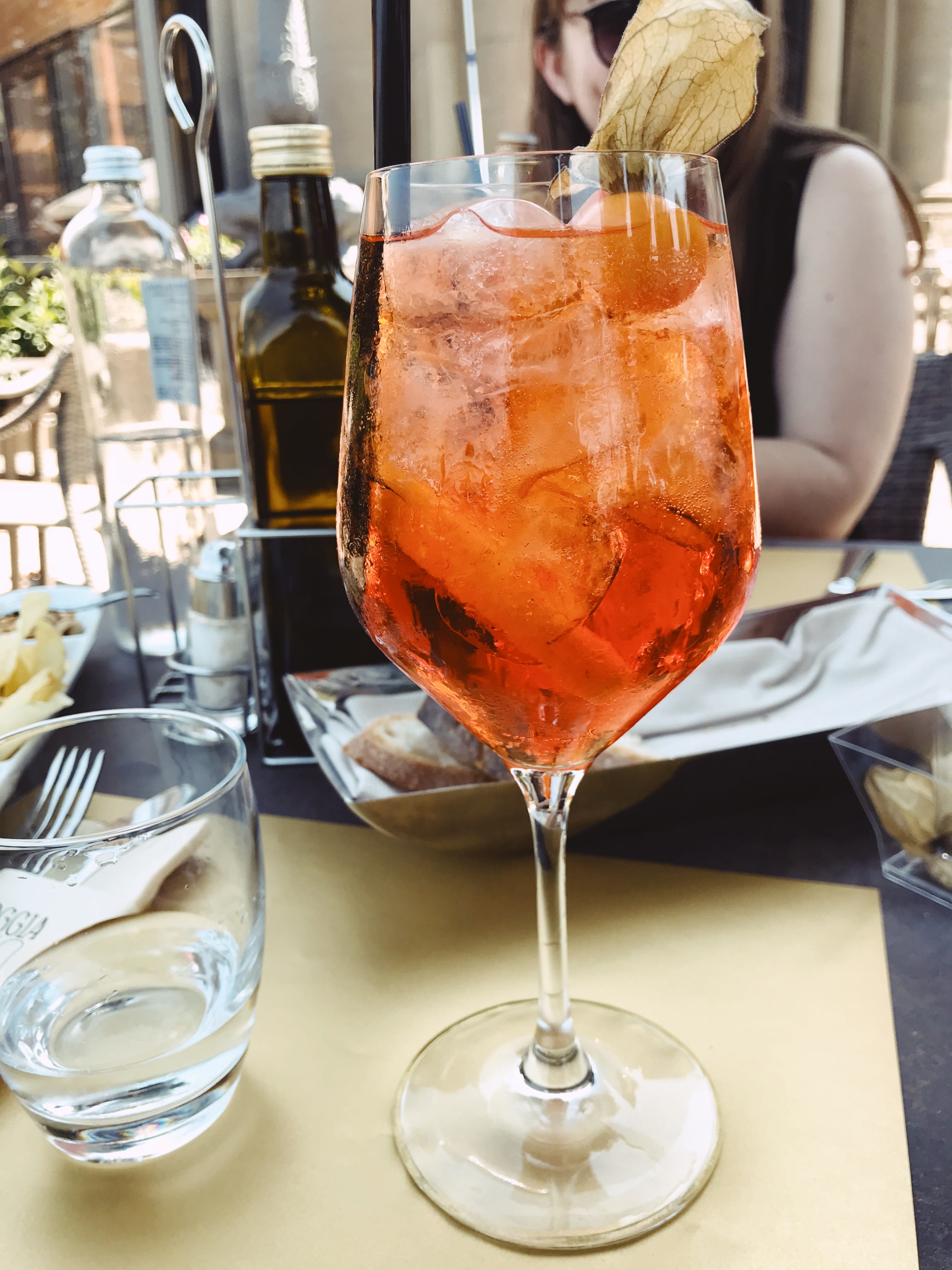
My classmates were mostly European professionals. One of them worked in Brussels, had Italian colleagues, and landed with a list of places to eat and drink already in his pocket. The rest of us collected the dividend: places no tourist finds. In a family-run trattoria I ate handmade pasta dressed with nothing but chili, garlic, and olive oil, and revised my opinion of myself on the spot: it turned out I did like pasta; I had simply never had good pasta. At a bar where every drink came with small free plates, everyone was holding the same orange glass. That was my introduction to the Aperol Spritz. For years afterward, that sweet fizz was my default summer.
In the class was a Dutch girl of Turkish descent, and we got along best, probably because we both came from migrations of our own. I said I wanted to see Prato, where Italy’s Chinese are most concentrated. On a free afternoon she rode the train out with me. Twenty-odd minutes later Italy was gone: Chinese signs the length of the street, as if we had stepped into a county town in China. The excursion was on no syllabus, but of all that summer’s discussion of migration, that half afternoon was the most concrete.
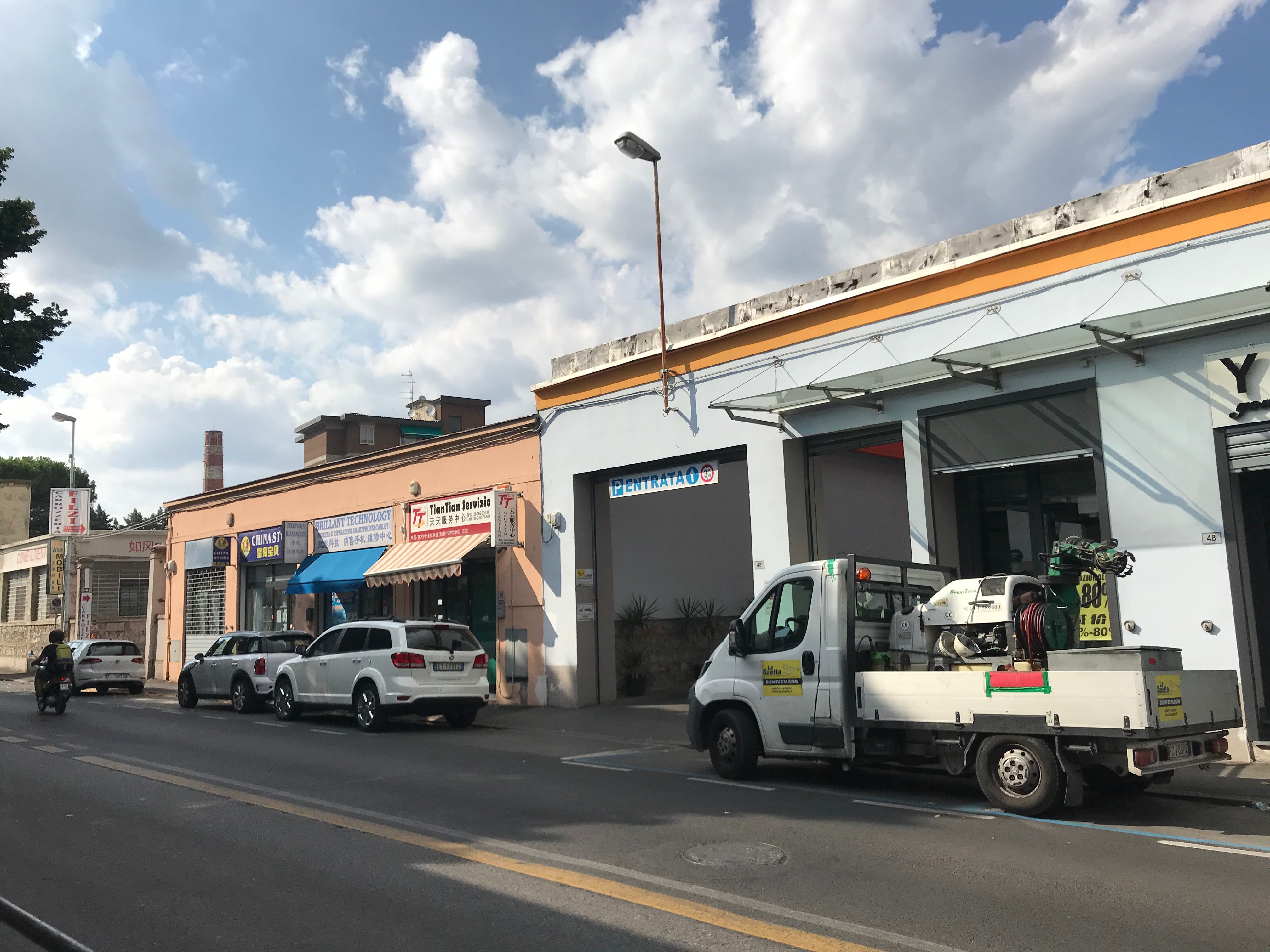
Three of my six visits were summer schools, two weeks or so apiece. A summer school is a gathering with an expiration date printed on it: people arrive from everywhere, study by day, drink by evening, talk past midnight, and disband before anybody has had time to tire of anybody. Italy, to me, was for years a summer fling, light version — all of the fun, the heartbreak deleted. We met once a year and went back to our lives. The relationship was kept strictly under two weeks, which may be why it has lasted ten years.
Somewhere along the way, Italy stopped being an occasion and became part of the ordinary calendar. I went back in seasons that no postcard advertises: Venice in March, with friends; Perugia in spring, for the journalism festival, because a different set of friends would be there. Turin, three times — the first in 2022 for another summer school, the next two because it was summer and friends were there. Names on the map became, one by one, somebody's city.
It helps that Italians are easy to love. The Chinese internet keeps a full file of jokes about them: unreliable, slow, and religious about food — you do not snap spaghetti in half; you do not put pineapple on a pizza. In my observation the jokes are all true, and all endearing. A nation willing to quarrel with you over the correctness of noodles is a nation that takes living seriously.
And the Italians I meet around Europe are, reliably, the most alive people in the room. In my master’s program there was an Italian girl — long curls, beautiful, sharp, and loved by everyone. Early in the program a group of us went out, and another girl said what the rest of us were thinking: “I come out of the shower looking like a rat. You come out of the shower and even your wet hair is sexy.”
Bologna was new this year. I stepped out of the station and fell in love inside a second or so, I couldn’t say with what — a color, a proportion, possibly a door handle. Italian design, from the Renaissance dome down to a chair on a street corner, gets every detail exactly right; there are no ugly things here. This is an arbitrary claim. I have yet to find a counterexample.
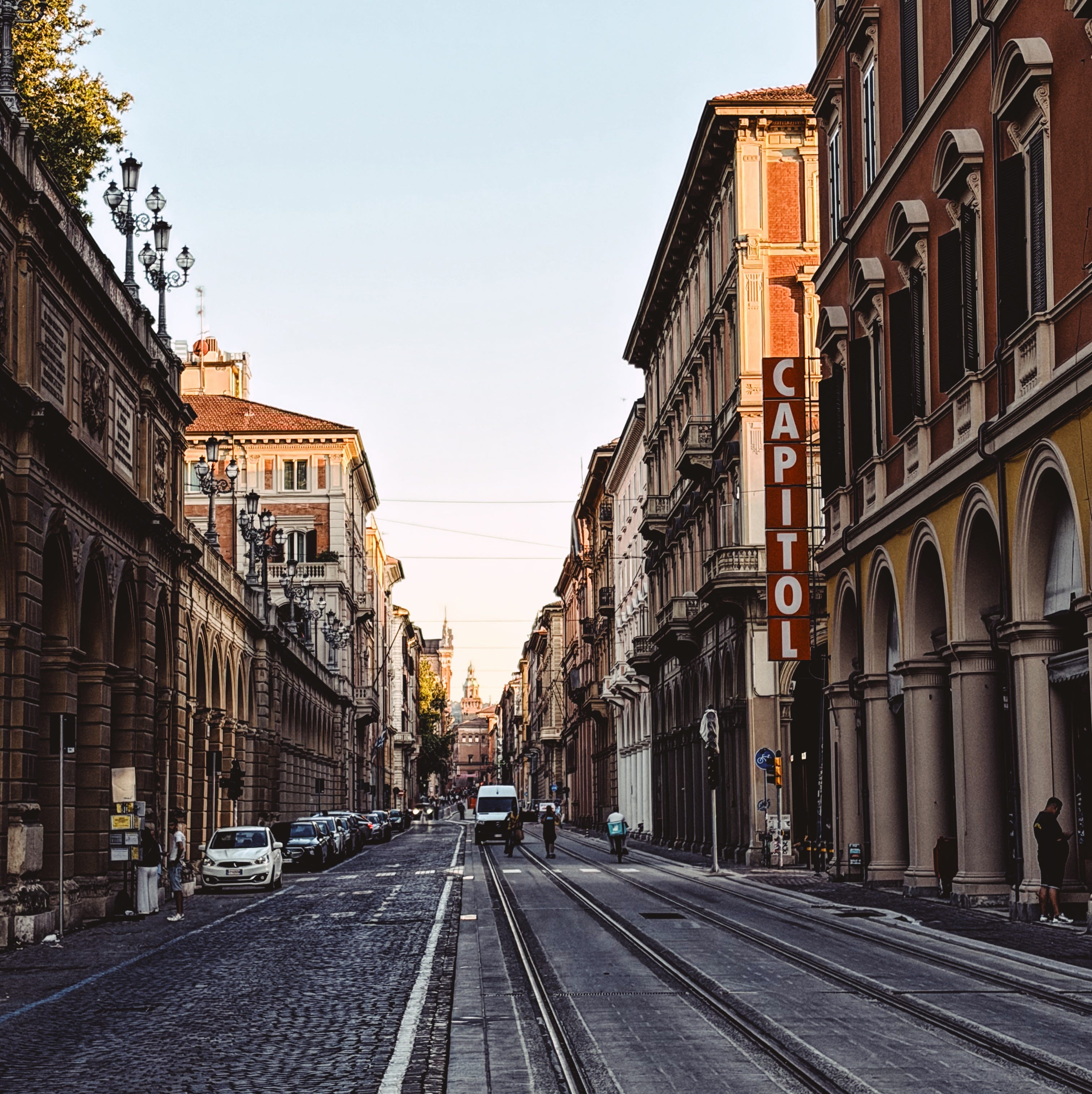
I love the colors of Italy — not the bright kind, the sun-aged kind: walls peeling exactly the right amount, the glare sifting tree shadows across them. Elsewhere, old looks shabby; in Italy, old looks pedigreed. The brighter the sun, the deeper the nostalgia. I believe this is a physical phenomenon found only in southern Europe.
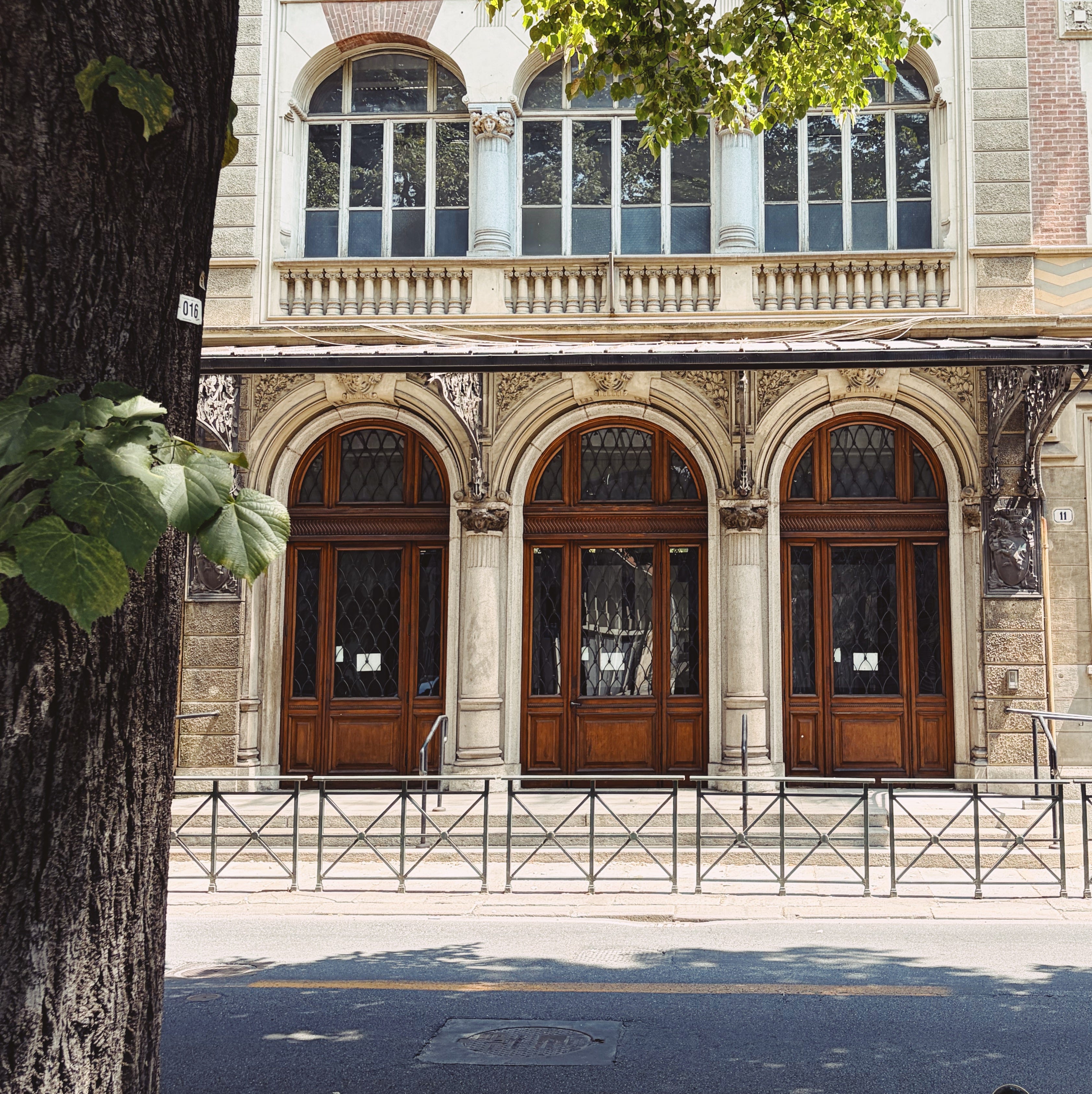
The insistence has a price tag, of course. Italian handwork is expensive — a hand-stitched wallet, a blown-glass lamp, figures that make you inhale. But the question it asks is not what the thing is worth. It is the reverse: how much are you willing to pay for design? In an age when everything can be had cheaper, this country stands stubbornly on the side of craft, the old and the new facing each other down in the street, neither giving way.
Before I came to Bologna, a local friend pressed a list of places to eat and drink on me. I had seen this plot before. In 2018 there was a list just like it, only in someone else’s pocket, and I tagged along behind. This one was mine. For days I had no real plan: I biked around, worked through the list, ducked into the small rooms where locals eat — Bologna’s pasta; a flatbread packed with meat that I privately call the Italian roujiamo (肉夹馍), after the street sandwich of my childhood; a gelato a day for maintenance.
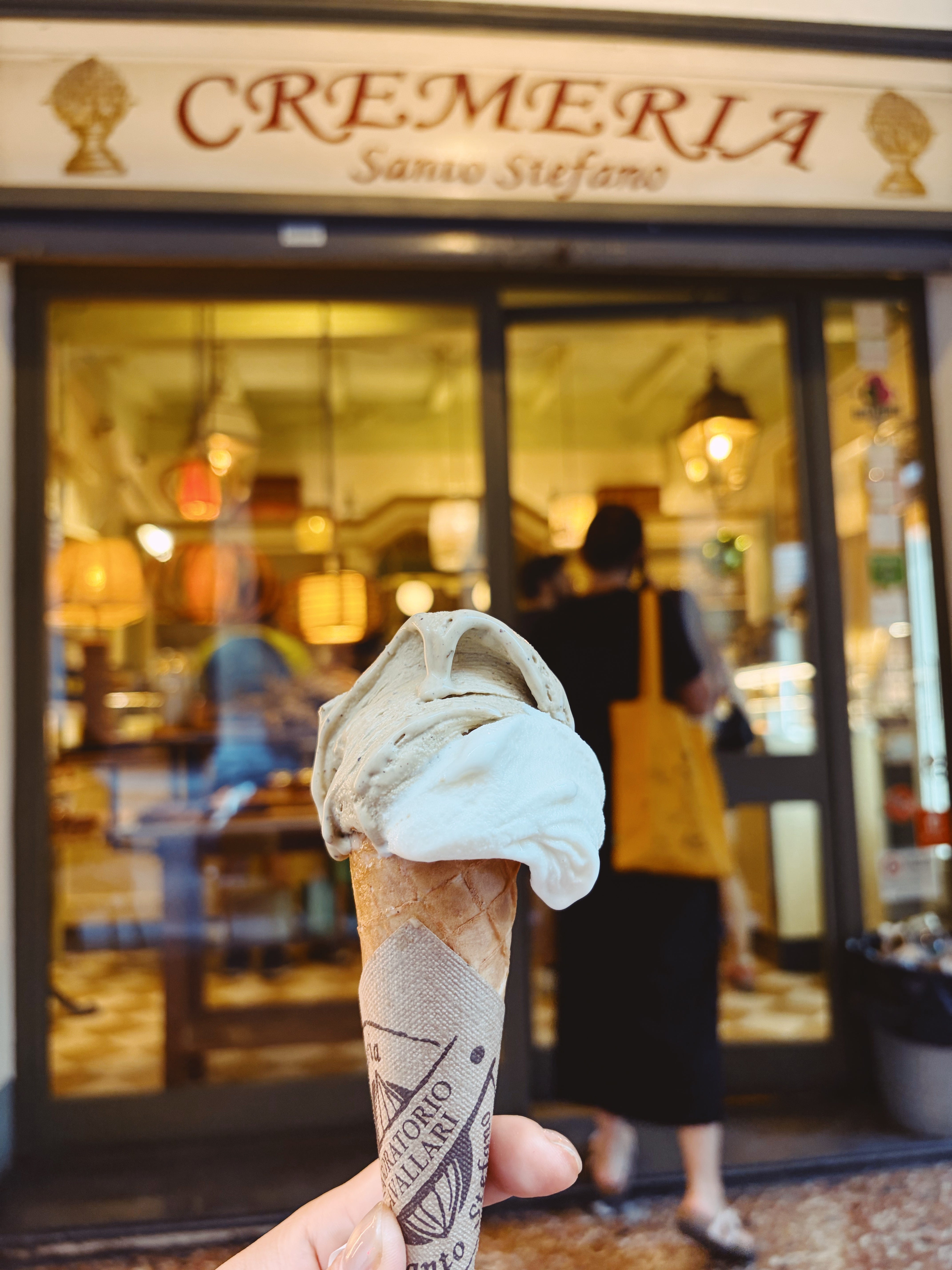
To fall for a city at first sight on the sixth visit means that beyond the childhood checklist, the place still keeps a reserve of surprise.
Everything else was as memory had it. The cicadas still unreasonable. The apricots still sweet, the juice still running down the fingers, sticky, wiped twice on the paper bag. In the evening squares, the orange glasses were still being raised. A spritz anywhere else always feels like a quotation; in Italy it is the original text. I stood at the bar a moment and ordered a Hugo. Elderflower, soda, a mint leaf. Almost no color; doesn’t photograph; nobody crosses half the world for one.
That is how change happens, I think — not in any single moment, but at the moment of ordering. The old checklist gets ticked as always; new symbols are quietly appended. Stay with a place long enough and the arrangement turns out to be mutual: it hands you back your childhood summers, and you grow new habits in its keeping.
I catch myself doing things I never used to do. I no longer climb up for the sunset — not that it got less beautiful; I simply have the quiet feeling there will be more of them, no hurry. Awe is for the first time. The sixth time has sixth-time business: calculating whether, if one came every year, a small flat with a balcony would beat a hotel; wondering what autumn here looks like.
Eight years ago, on the hill, we discussed migration in the big words: push, pull, borders, identity. Nobody mentioned that a person’s feeling for a place migrates too — from being stunned, to missing it, to wanting, finally, to spend some days together not worth writing about. The beauty is what it was; the five-hundred-year lag is still there. But look long enough and the lag becomes part of the scenery. It no longer needs catching up to.
On my last day in Bologna, the heat presented its bill. I showed the first signs of heatstroke; my appetite packed up and left; and I caught myself — of all things — looking forward to Denmark. My body, it turns out, has been tamed by the Nordic weather. The checklist now belongs to Italy and the body to the North, and between the two of them, the two-week limit enforces itself. I already know the sequel, too: a few weeks back inside Denmark’s order — everything clean, everything quiet, everything working — and I will begin to miss precisely this mess, the noise and the peeling and the happy disorder. Too much order, it turns out, is also something a person occasionally needs a holiday from.
Italians like to say the goodbye twice: ciao, ciao. It suits an arrangement like ours. Ciao is the same word coming and going, so for a place one returns to every year, each goodbye is already half of the next hello.
Ciao, ciao, then — and Buona giornata. A shopkeeper taught me that last one eight years ago. The whole trick, she said, is in the ending, which has to spiral upward.
It seems your experience of Italy is mostly limited to the North. You should try travelling more in the Centre and South. As you travel Southward Italy changes, becoming less European and more Levantine, and there's much more of the mess and the happy disorder.