
My Odyssey Years
Hope your road is a long one, full of adventure, full of discovery.

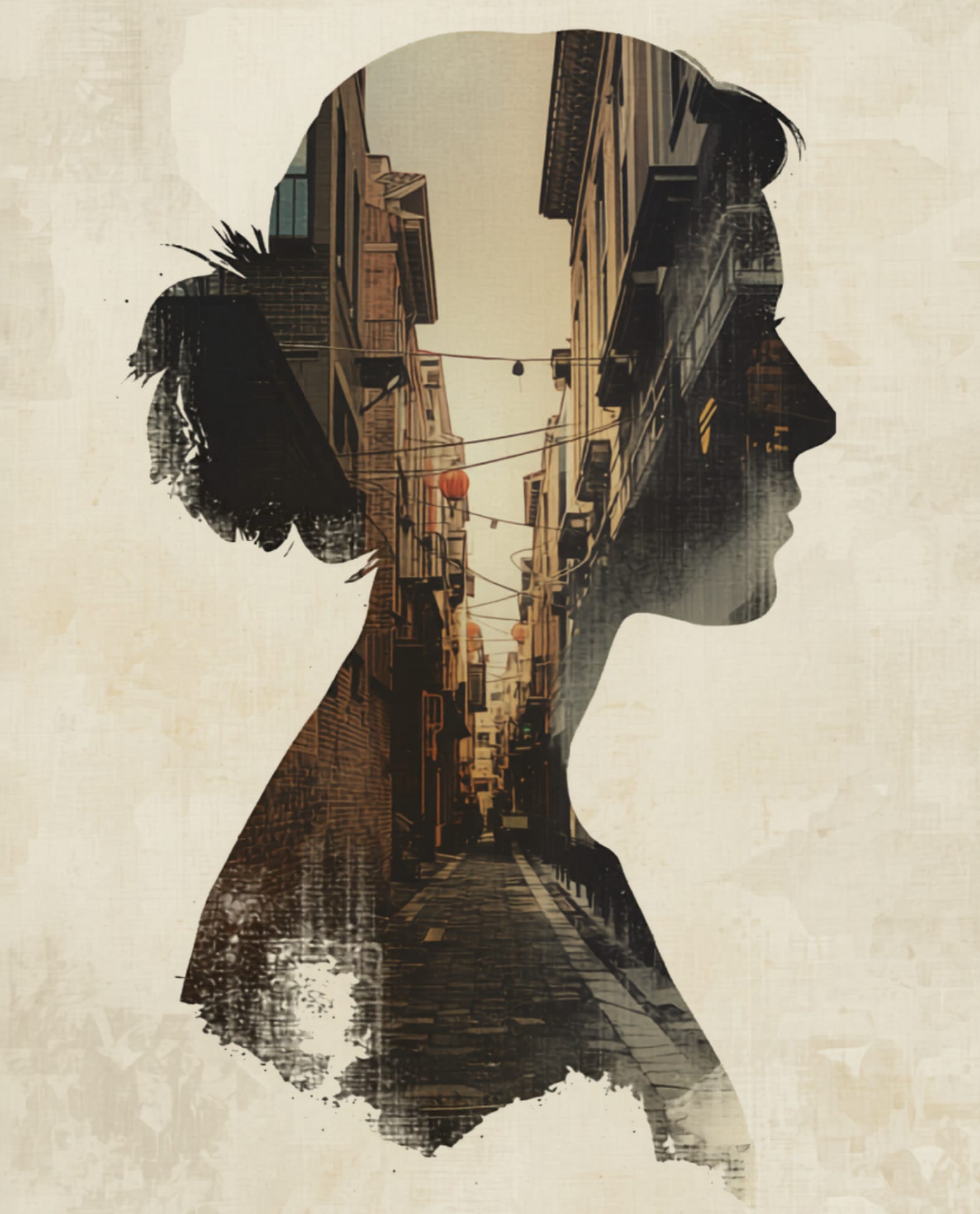
The columnist David Brooks coined the term “Odyssey Years” in 2007 to describe the extended period of wandering between adolescence and adulthood—those years between 20 and 35 when you drift between jobs, cities, identities, not yet settled, not yet sure who you are. That long stretch between knowing who you’re supposed to be and figuring out who you actually are. The years of searching, trying on identities, not yet arriving.
Mine lasted over a decade. From a small college town in Ohio to Beijing to New York to Aarhus. A decade of moving between countries, losing my voice and finding it again, refusing scripts and searching for my own.
My Odyssey Years began in America, where I first tasted freedom. It wasn’t political, not at first. It was simpler than that, almost mundane.
I was a college student in a small college town in Ohio, studying journalism. Because of the Freedom of Information Act (FOIA), public records were genuinely public. One of our classroom assignments was simply to look up the mayor’s name and whether he had any speeding tickets. You typed a name, the information appeared. Another time, the mayor walked into our classroom to take questions about city affairs. Students asked whatever they wanted. He answered.
In China, none of this would have been possible. But what struck me wasn’t just the access—it was the question that came with it: now that you can ask anything, what do you want to ask? Now that you can do anything, what do you want to do?
Freedom, I began to realize, meant having to think for yourself.
In another class, we were assigned to review court documents from a case involving a former state attorney general who had misused campaign funds. As I read through the files, I noticed one of the people mentioned in the case was teaching at our school. I asked my professor if I could interview him for the assignment. He said yes—but added that he didn’t want to see any softball questions. He wanted real questions. Tough questions. What was the working environment like? What did you know?
I was nervous. I worried it would come across as mean, or harsh. But the man agreed to the interview, and he answered everything I asked—openly, without defensiveness.
This was unimaginable to me. In China, this kind of access, this kind of directness, simply didn’t exist. Everything about these experiences made me feel that freedom had no ceiling. You could ask. You could know. You could do anything.
For someone who grew up never quite fitting the scripts offered to me at home—like most Asian parents, mine wanted me to study law or finance, or become an engineer, but I was always drawn to the media—this was a revelation. America, for all its performative excesses, held space for misfits. It let me exist without first having to explain myself.
But even here, there were scripts. Once, a lecturer was explaining freedom of information laws. “In America, we have transparency,” he said. “Not like China or North Korea.” I felt a flicker of discomfort. I couldn’t entirely disagree—but something about the framing felt imprecise, too neat. China was simply “suppression.” End of story.
I filed the feeling away and moved on.
After graduation, I returned to China. I wanted to practice journalism where I came from, where the stories were.
This was around 2012. I returned to China in the summer that year, and the media landscape still felt alive. Looking back, it was the tail end of something—though we didn’t know it yet.
Bloomberg Businessweek (彭博商业周刊) had just launched its Chinese edition the year before. Modern Media (现代传播), based in Red Street, was putting out lifestyle magazines alongside serious journalism. There were still investigative reports that mattered: that same year, Bloomberg published an exposé on the family wealth of China’s incoming leader, and was promptly blocked. A year later, Caixin would publish “The Huangs of Laguna Beach,” tracing the overseas assets of a powerful family’s inner circle—the story was deleted within days, then mysteriously restored.
Meanwhile, China’s tech giants were pouring money into content and experimenting with new forms. Tencent launched “Living” (活着), a photo essay column documenting ordinary lives across China. They created “Dajia” (大家), an opinion blog modeled after The Huffington Post, signing up prominent scholars and columnists to write for a mass audience. And there were offline events too—salons where intellectuals discussed ideas that pushed against the edges of the permissible. I attended some of them, sat in packed rooms listening to historians debate the Republican era, philosophers argue about justice, writers reflect on memory and censorship. I even wrote press releases for Tencent Culture covering these events. Back then, every weekend in Beijing offered gatherings like this—book launches, lectures, discussions that felt like they mattered.
I worked at Caixin, one of the most prestigious outlets in the country. The editorial standards were rigorous, even if the writing was dry. Freedom was limited, yes, but there was a game you could play: racing against administrative orders, publishing stories before the ban came down. You learned to dance in shackles.
Later I moved to Lens magazine. They had just resumed publication after being shut down for “Walking Out of Masanjia“—an exposé that revealed systematic torture in a labor camp, through the account of a survivor who had smuggled out a letter hidden in Halloween decorations sold to the US. The story became especially sensitive because many of those detained were Falun Gong practitioners. After the crackdown, the magazine pivoted from documentary photography to lifestyle aesthetics. A quieter existence. But still, in its own way, an attempt to voice.
I always had a sense of what kind of stories I wanted to tell, what style of writing I had in mind. Caixin was professional but lacked soul. The literary nonfiction that was fashionable at the time was too focused on craft—beautiful sentences, but weak on fact-checking, on the professional rigor that separates reporting from storytelling.
Back then, the two writers about China I admired most were Zha Jianying and Peter Hessler. Zha’s “Enemy of the State,” published in The New Yorker in 2007, was a portrait of her own brother, a democracy activist serving nine years for “subverting the state”—intimate, precise, unflinching. Hessler’s River Town showed me something else: that you could write about China without turning it into a spectacle, without the exoticizing gaze that so much Western journalism defaulted to. He wrote about ordinary people as ordinary people.
I wanted both: rigor and soul, intimacy and professionalism. Stories that weren’t being told, told in a way that respected both the subject and the reader.
In 2013, a partner and I transformed an existing translation project, Cenci Journalism Project, into something more ambitious: translation plus original reporting, focused on marginalized communities—LGBT people, workers, patients. I mostly did editorial work. We had a column called “Dissenters” (异见分子), profiling people who crossed lines—artists like Ai Weiwei, student activists abroad. From my experience, I knew these were sensitive topics. But I thought: the worst that could happen was that we couldn’t post on social media. Our website wasn’t registered with the authorities, which gave us a higher degree of freedom. I tried my best to let the younger writers write whatever they wanted—the way my own editors had once given me space. That was the freedom I wanted to pass on.
That was my voice. For about six months.
Then, one afternoon, I was editing a draft in a café when someone messaged our group chat. Then more people started asking what happened. I checked—the website was blocked. Our social media accounts were wiped out. All of them, at once. I was stunned for a moment, but not entirely surprised. Later, my partner was summoned for “tea.”
That was my most visceral experience of China’s unfreedom—not as an abstract concept, but as a door slamming shut on something I had built with my own hands. I was traumatized by it for a long time. But still—it was a price we could afford. We had known, almost from the start, that this would probably happen. We just didn’t expect it so soon. And this is how it works: you do something, you learn from it, you figure out where the line is, and you try to be smarter next time.
After that, I lost my voice for a long time. What I wanted to say, I couldn’t. What I was allowed to say didn’t interest me. I drifted between China and America, searching.
In 2015, I moved to New York. I had written it into a bucket list years ago—”live in New York for a few years”—without quite knowing why. Maybe it was E.B. White’s Here Is New York, which I had loved: “each embraces New York with the intense excitement of first love, each absorbs New York with the fresh eyes of an adventurer, each generates heat and light to dwarf the Consolidated Edison Company.”
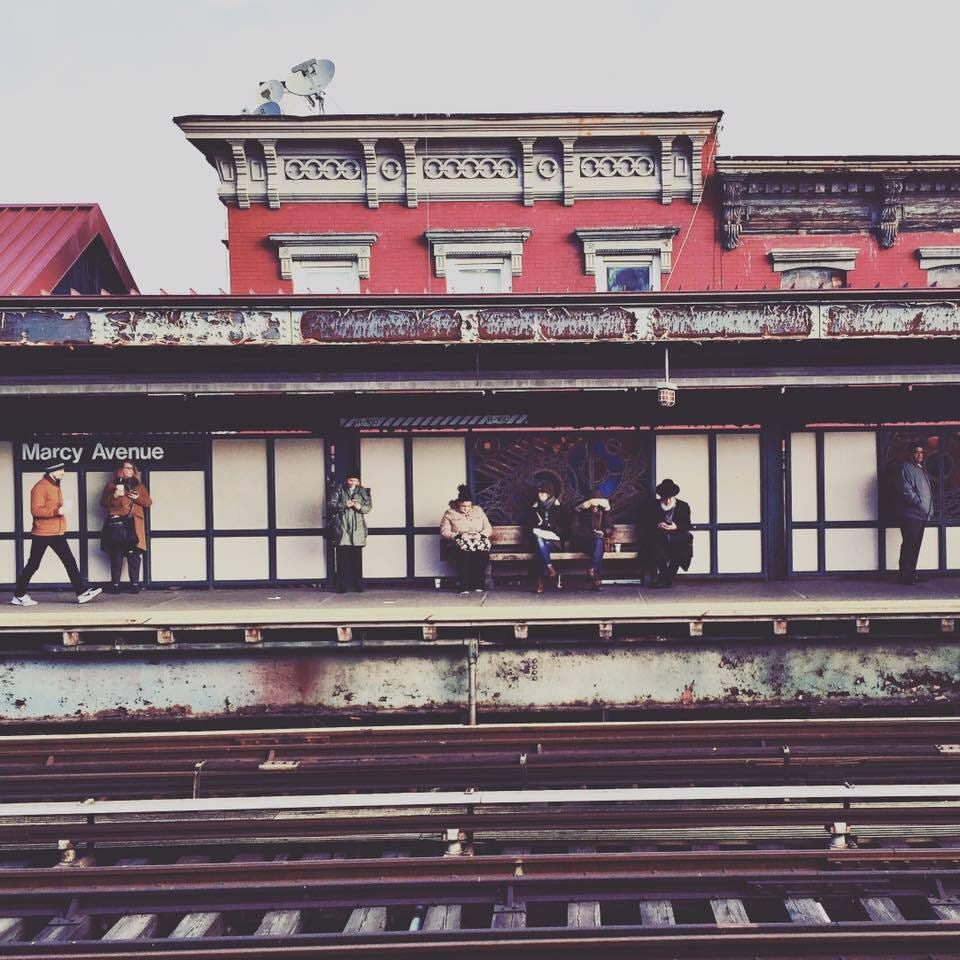
Years of suppressed creative desire finally exploded. I followed my curiosity, reached out to people and communities I wanted to understand. I lived in Brooklyn, among Orthodox Jews and Puerto Rican families and young artists who had fled Manhattan’s rising rents. I covered protests and marches. I wrote about coffee shops, canvas bags sold by vendors. I took photographs I was proud of. I knocked on doors and interviewed owners of ethnic businesses—an Orthodox Jewish liquor store, a Thai restaurant owner, a Peruvian-Chinese selling rotisserie chicken.
It was the most creatively productive period of my life. New York is a perfect place for creators—so many scenes from art-house films, so many stories layered into the city, the streets themselves like cinema. Material everywhere, details at every corner. My school was on 14th Street in Manhattan; in the café downstairs, people were debating decolonization.
Along the way, that flicker of discomfort I had felt in journalism school—it returned, sharper now.
Back then, everything was new. I was absorbing knowledge, expanding my horizons, and my admiration for America was largely uncritical. But after what I had experienced in China—after watching so many people work within the cracks, dance in shackles, carve out space for real journalism against the odds—the simple narrative of “China equals suppression” felt incomplete. It erased all that effort, all that agency. It reduced everything to a story about the CCP, not about the people who refused to be silenced.
In the American context, China was almost always framed through geopolitics—either as threat or as a distant symbol of unfreedom. And if you were Chinese and willing to read from this script, you could easily be given a stage. The role was already written: victim, witness, dissident.
In some ways, I was a victim. But I didn’t want to live as one. I didn’t want to be given a stage without a voice. I didn’t want to fit a script, to be seen without complexity, to become a trophy proving someone else’s point. I didn’t want the CCP to become the axis around which my entire existence is measured.
At the same time, I had no interest in joining those who dogmatically defended China.
My school was famous for being leftist—one of the few institutions in America that still taught in the continental philosophy tradition, the place where Hannah Arendt once taught. But I gradually found it hard to take seriously. It was a strange hybrid: a fashion and design school stitched together with a continental philosophy school. And in a country where even unions are demonized, talking about “the left” often felt more like gesture than substance.
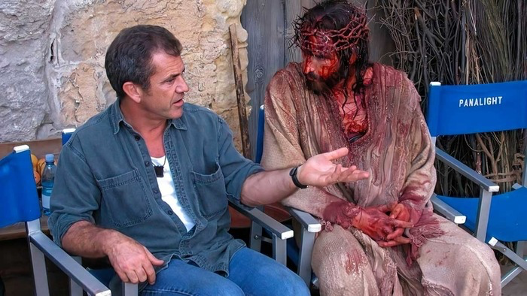
The American “leftists” I encountered used theory dogmatically to explain reality in ways that were twisted—justifying China’s human rights abuses in the name of anti-imperialism. In 2019, I saw people opposing the Hong Kong protests on the grounds that it was imperialist intervention. Their logic was simple: capitalism is bad, therefore communism must be a good alternative. They had never lived under it—it was just theory to them. Listening to them talk always reminded me of that bloody Jesus meme. One person comfortable, the other embodying a suffering that is, for the first, merely a subject of conversation.
I didn’t fit either script. The victim narrative, the tankie narrative—neither was mine.
I left New York at the beginning of 2017, still uncertain about everything. New York had freedom, it had audiences—but the stories I wanted to tell were elsewhere, and so, it seemed, were the people I wanted to reach. New York is probably one of the best cities in the world—I still think so today—but I just couldn't see myself living there long-term. Everything there felt like it was floating in the air.
Years later, this would be one of the reasons I felt more at home in Europe. But that’s another story.
Back in Beijing, I lived in a hutong. Summer evenings buying beer from the little imported-goods shop on Baochao Hutong, sitting on the curb with friends talking late into the night, going to someone’s yard for barbecue—it was the happiest years of my life. We had our own small support group. The hutong held all of it: the laughter, the dreams, and the heavy discussions too. My stomach was full, and so was my spirit.
Around 2019, after five or six years of avoiding Weibo—ever since my first account was banned in 2014—I returned, under the name Hutong Arendt.
Hutong, from those nights. Arendt, from New York—she is my favorite political philosopher. “I have never in my life ‘loved’ any people or collective—neither the German people, nor the French, nor the American, nor the working class or anything of that sort. I indeed love ‘only’ my friends and the only kind of love I know of and believe in is the love of persons.”
That quote was one of my first posts that people noticed. In China, where nationalism dominates social media, I didn’t expect a quote about refusing to love any collective to resonate. But it did.
I started posting commentary on women’s issues. News from outside the firewall that contradicted official narratives. Especially about Hong Kong, during the anti-extradition protests. I was attacked constantly, but I also felt the reconnection with an audience. There were mothers and teachers who wrote to me. High school girls in the private messages, telling me how my posts inspired them, how they saw things they couldn’t see elsewhere.
One message has stayed with me. A high school girl in Xinjiang—those two words alone say enough. She told me she was depressed, that everything around her felt suffocating. To deal with the random phone checks on the street, she would clear her chat history every time, sometimes even delete her account entirely. When she could, she would come back and message me again. She said what I wrote opened her eyes. She hoped one day she would have the ability to leave, to get out.
Maybe this came from ego—every person who wants to speak in public also wants to be heard, wants to know their voice has value. But I understood: what I was expressing was needed.
That wave didn’t last either. After I was banned for my posts about Hong Kong, I basically couldn’t use Weibo anymore.
This is what it feels like: you push the boulder up, and it rolls back down. You try again. It rolls back down. Sisyphus. It’s not heroic. It’s labor.
And this was the second time I lost my voice.
The exhaustion—and the constant awareness that you can be erased at any moment—made me start to think about leaving. It wasn’t fear exactly. It was a calculation. Risk assessment.
Covid made the decision easier. In 2020, I left for Europe. From the decision to the departure, it took only six months. I didn’t hesitate for a moment.
The day I left was the last day of August. I had cut my hair the shortest it had ever been. My previous flight had been canceled due to pandemic restrictions, and I had finally managed to buy a new ticket at an exorbitant price. My closest friends in Beijing came to see me off at the airport—my flatmate, who would stay in our apartment near Lama Temple and inherit all our furniture; my neighbor from the hutong, a journalist and longtime friend; my partner from the Cenci. We took a photo together at the entrance to international departures. There was no sadness—we had grown used to goodbyes. Only the anticipation of a new life.
After years of traveling back and forth between China and America, this time felt different. I knew, somewhere inside me, that the next time I came back I would only be a visitor. I wasn’t coming back.
In Europe, part of my work is still journalism. I started writing more in English—partly as a form of protection. Language itself becomes a shield: writing in English makes you less likely to be targeted. But it also means you become irrelevant to the readers you care about most, the ones you want to write for, the ones who could truly understand you.
And when you write about China in English, for non-Chinese audiences, you have to consider the average reader’s knowledge, the limits of space. Everything gets flattened. On one hand, you are a journalist; on the other, you are explaining yourself—your country, your background, your existence. The two roles blur. You don’t always know which one you’re performing.
I am envious of my European colleagues who can write in their mother tongue. They can talk proudly about their reporting, share their bylines, and build careers in the open. There may be controversies, but it’s more about professional practice—not a dangerous profession. And they don’t face loyalty tests.
For Chinese journalists practicing overseas, the ecosystem is precarious. Opportunities are limited, institutional support scarce—somewhat better in America, but nowhere abundant. There is no union, no professional network to fall back on. Every professional choice carries political weight. You learn what you can say and what you can’t—or you’re always weighing.
Even when you’re safer abroad, you still face the choice: visibility or practice. Attention or profession. The more you’re known, the greater the risk of becoming a target. If you believe getting the story out matters more than being recognized for it—if you want safety—you may have to give up your byline, give up certain visibility. But that means limited career growth, limited recognition, limited sense of professional accomplishment. You can’t have everything.
Your social life is also constrained. You have to socialize only with people you trust. When you have vulnerabilities, an unfamiliar person could become the weak point. You stay low-key. You become a lone wolf by necessity.
You learn to live with a particular kind of solitude. Professional solitude, social solitude, and the solitude of not knowing who you’re writing for, or whether your words reach anyone who truly needs them.
This is not just my confusion. It’s shared by many who do this work.
Recently, I announced on LinkedIn that I was starting a Chinese-language media project aimed at the Chinese diaspora in Europe. The first comment that appeared: “Will you cover CCP transnational suppression?” Another: “If you don’t work in the direction of the CCP then the editorial team will get in trouble. If you work in accordance with CCP principles, it will be very dull.”
I was frustrated. As if everything I am is defined by my relationship to Beijing.
In China, the cage is obvious: censorship, surveillance, the risk of disappearing. And home—home is its own cage too. Family ties, the possibility of return, the weight of what you can’t say to the people who knew you first.
But leaving one cage doesn’t mean freedom. It means entering another.
Another part of my work is in policy spaces, analyzing media narratives related to China, consulting for European institutions, occasionally sitting in rooms where decisions are shaped. The rooms themselves are unremarkable: fluorescent lights, bottled water, thirty or forty people around the room, the same cautious language.
Much of the conversation is still caught between Panda Huggers and Dragon Slayers—those who naively embrace engagement and those who see only threat. Little room for anything in between.
In these rooms, I am often the only Chinese person, or one of very few non-Europeans. I am both the expert and the subject. The insider and the outsider.
During one such meeting, I began my remarks with “We should—”
The words left my mouth, and I stopped. A distinct discomfort. It struck me: I don’t think I am truly one of “we.” At least, the relationship is more complicated than a simple “we” and “them.”
So I’ve become the person who objects. Who insists on nuance when the framing gets too neat. Who complicates things when others want them simple.
During a coffee break once, a colleague joked: “You want to be a pain in the ass, right?”
I think that is exactly who I want to be.
My favorite poem contains these lines:
Too foreign for home,
Too foreign for here.
Never enough for both.
This may be my state for many years to come.
I am not looking for a place where I finally belong. I don’t think that place exists. What I’m looking for is simpler and harder: to know what my voice is, to be honest with myself, and to be willing to pay the price for it. To practice what I think is right, even when the boulder rolls back down.
The discomfort I felt saying “we”—the unease watching those figures displayed rather than heard—these are not signs of confusion. They are signs of clarity. I can see the scripts being offered to me. I am trying, still, to refuse to read from them.
Maybe that’s all freedom is, in the end. Not the absence of a cage, but the refusal to let any single cage define you. To be useful without being used up.
In China, many practitioners idealize journalism—but idealization is complicated. Sometimes it means giving the work too much meaning, which can also mean covering over the harm it does to you or other people. For me, it’s just a profession. Something I could walk away if I ever want to stop.
But I haven’t stopped. Not because I’m couragous , or because I believe in some grand cause. But because of the journey itself—the people I’ve met along the way, the stories that belong to no one’s script, the moments of connection that no one can claim.
As Cavafy wrote to Odysseus:
Hope your road is a long one,
full of adventure, full of discovery.
Mine has been. The curb on Baochao Hutong, summer nights, beer in hand, talking until the sky turned light. The packed rooms in Beijing where ideas still seemed to matter. The Brussels meeting room where I stumbled over “we.”
And now, writing this—in a language that is not my mother tongue, for readers I may never meet, in a place that is not quite home. But it’s my voice. And that’s enough.
These were my Odyssey Years. And I'm still walking.
Hey Chu Yang,
So happy I came across your piece. It helped me see my own doubts so clearly!
I’m Overseas Chinese, grew up in Germany, and I’m traveling across China right now doing personal field research on shifts in Chinese values and worldviews.
How do you find your own voice when every stage offers you a script…
Your framing of refusing both the victim narrative and the apologist narrative articulated something I’ve been circling for months.
Thank you again for sharing your journey!
Best,
Long
Another fine essay, Chu Yang. Thank you. You might also enjoy the work of Ece Temelkuran. See:
https://chinaheritage.net/journal/the-unhomed-mourning-in-the-future-tense/